
What is Women’s Equality day?
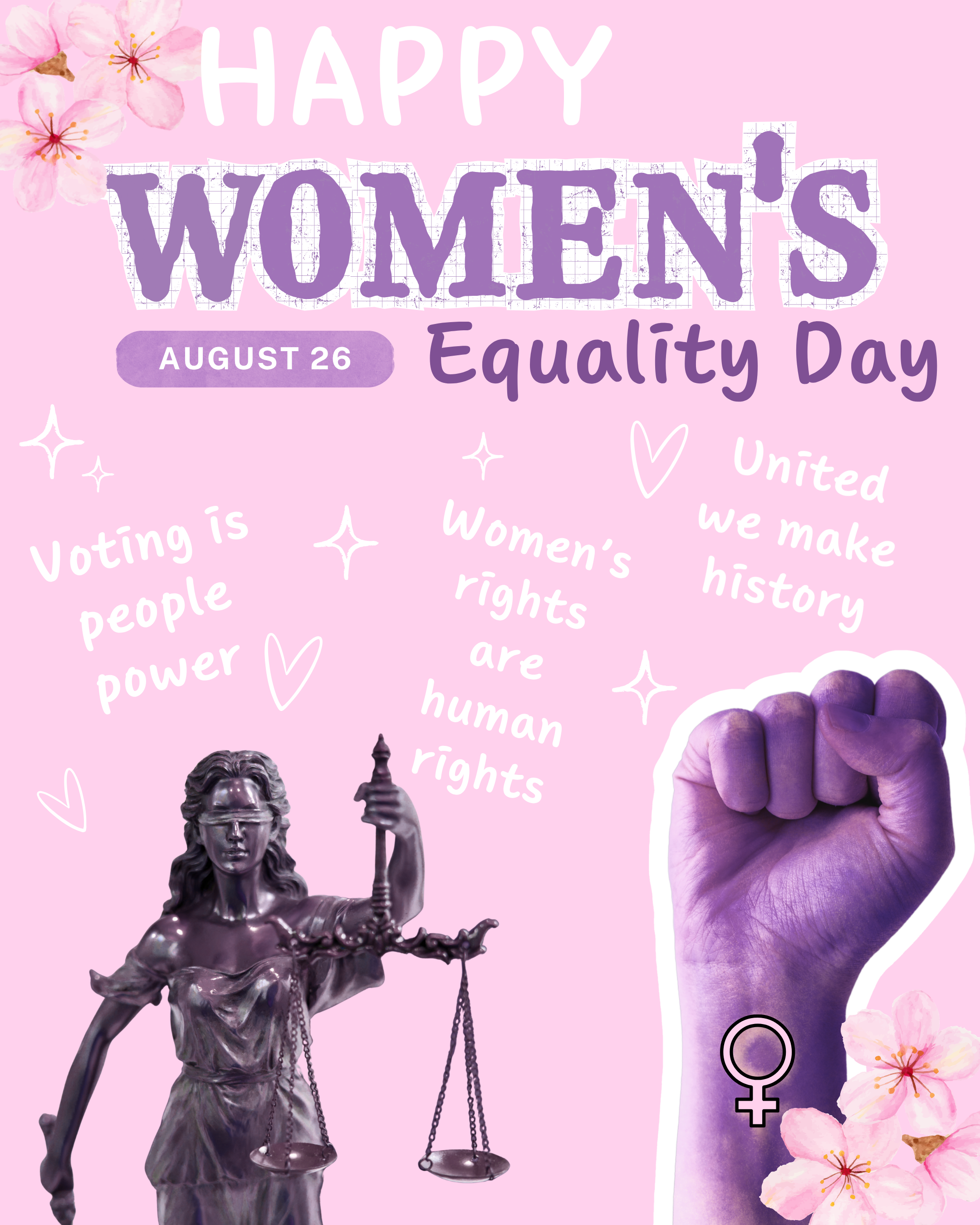
Since 1971, Women's Equality Day has been celebrated annually on August 26 in the United States. The day honors the long struggle for women's rights and celebrates the progress that has been made toward equality.
Here is a timeline of information to understand further how we got there…
Beginning in the 1800s, many women in the United States began advocating for equal rights. At that time, women faced many legal and social restrictions. They often could not vote, had limited property rights, and were denied many educational and career opportunities available to men.
In 1848, leaders such as Lucretia Mott and Elizabeth Cady Stanton organized the Seneca Falls Convention, the first women's rights convention in the United States. The convention called for equal rights for women, including the right to vote. Later, activists such as Susan B. Anthony, Sojourner Truth, and many others continued the fight through the Women's Suffrage Movement.
For women to gain the right to vote nationwide, the U.S. Constitution had to be amended. During World War I, women made significant contributions by working in factories, serving as nurses, and supporting their communities while many men were away at war. Their efforts helped strengthen support for women's voting rights in Congress.
On August 26, 1920, the 19th Amendment to the U.S. Constitution was officially certified, guaranteeing women the right to vote. More than 50 years later, in 1971, Congress designated August 26 as Women's Equality Day to commemorate this historic achievement.
Women's Equality Day celebrates the accomplishments of women while also recognizing the challenges they have faced and continue to face in the pursuit of equal rights. Although significant progress has been made, equality has not been fully achieved. Many women still experience issues such as unequal pay, gender discrimination, underrepresentation in leadership positions, and barriers to opportunities in some fields.
Here are several ways to honor the day:
Learn about Women's History you could read books, watch documentaries, or visit museums that highlight the contributions of women who helped shape history. Learning about leaders such as Susan B. Anthony, Ida B. Wells, Dolores Huerta, Shirley Chisholm, and Ruth Bader Ginsburg can provide inspiration.
Support women-owned businesses- Shopping at women owned businesses or using their services helps promote economic opportunities for women in your community.
Recognize the women in your life- Take time to thank the women who have inspired, mentored, or supported you. A handwritten note, phone call, or simple expression of gratitude can make a meaningful difference.